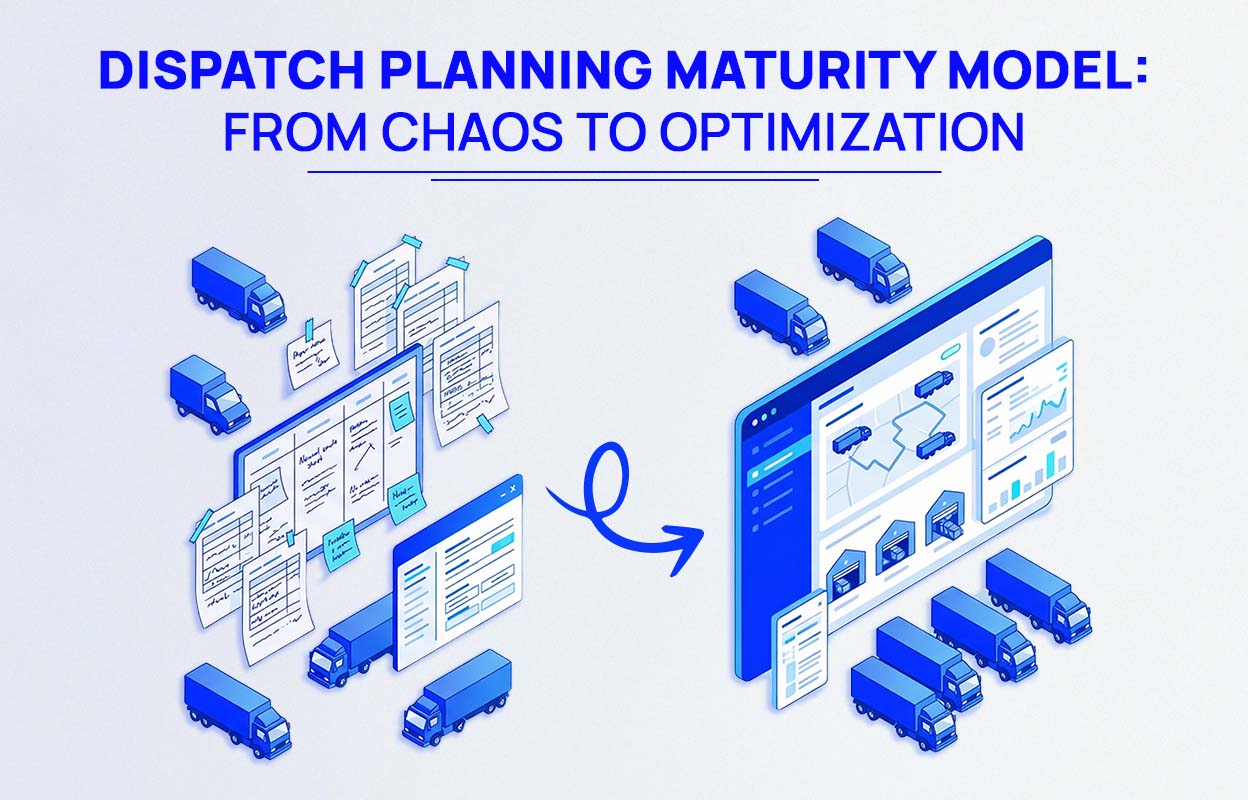
Dispatch Planning Maturity Model: From Chaos to Optimization
27/04/2026
Most logistics teams are stuck firefighting daily without realising there is a structured path out. This operator playbook breaks down the four stages of dispatch planning maturity and shows exactly where your plant stands today.
Introduction:
Most Dispatch Plans Are Not Really Plans
Walk into almost any mid-size manufacturing facility and ask how dispatch planning works. The answer you’ll hear most often is something like, “we check pending orders in the morning, call a few transporters, and see who’s available.” That’s not planning. That’s reacting. And the scary part is most operations have been doing it this way for years without realizing there’s a better path. At Haulog, we’ve worked with enough logistics and SCM teams to know this pattern well and to know exactly what it costs — in time, money, and missed deliveries.
The 4 Stages of Dispatch Planning Maturity
Understanding where your operation sits today is the first honest step toward fixing it.
- Reactive (Stage 1) — Planning happens on the day itself. Vehicles are picked based on who picks up the phone. There’s no view of tomorrow and every problem comes as a surprise.
- Partially Structured (Stage 2) — An Excel sheet exists and some transporter contracts are in place but the plan falls apart the moment a vehicle doesn’t show or an order changes at the last minute.
- Digitized (Stage 3) — A TMS or ERP module is in use but the data is usually delayed and your team still relies on phone calls to know what’s actually happening on the ground.
- Optimized (Stage 4) — Planning is forward-looking. Historical data drives vehicle demand forecasts. Transporter performance determines allocation. Exceptions surface automatically not after the damage is done.
What’s Really Causing the Daily Chaos
The problems aren’t random. They follow a very predictable pattern across plants:
- No forward demand visibility so vehicle planning is always last-minute
- Over-reliance on 3 to 4 familiar transporters regardless of route or capacity fit
- Mismatched vehicle capacity leading to wasted spend that nobody tracks
- Shift handover gaps where the incoming team starts from scratch every time
- No accountability trail when deliveries go wrong or commitments aren’t met
Where Most Digitization Efforts Get Stuck
Moving to a digital platform doesn’t automatically fix these issues. What it does is make the gaps impossible to ignore. Transporter data is messy and scattered. Workflows haven’t been defined before the system was set up. Half the team is still on WhatsApp. Reports get built but nobody uses them because they’re disconnected from actual decisions. The gap isn’t the technology. It’s that teams start doing things around the system instead of through it.
How Historical Data Changes the Game
Mature operations use months of shipment history to plan ahead. Route-wise volumes, transporter on-time rates, seasonal peaks, average load times by SKU — all of it can feed smarter pre-planning. If your plant consistently dispatches 35% more in the last week of the month, you should be locking in transporter capacity 10 days ahead not scrambling the evening before.
Conclusion
One Question Worth Asking Your Team Today
If your most experienced logistics person left tomorrow how long before the operation breaks down? If the answer is hours or days your operation is built on people not process.
The goal Haulog helps teams work toward is an operation where the answer to that question is simply — it wouldn’t break down. That’s the shift worth building and it’s more achievable than most teams think.
Get logistics & Transportation industry update and business insights
Suggested Products
-
Haulog - Shippers
-
Haulog - Carriers

Tags
Recent Posts
-
The Logistics Control Tower Playbook for Manufacturers
-
Dispatch Planning Maturity Model: From Chaos to Optimization

